
Madeira Beaches & Natural Pools: The Complete Coastal Guide (2026)
When people first research Madeira, one of the most common questions is:
Does Madeira have beaches?
The answer is yes — but not in the way you might expect.
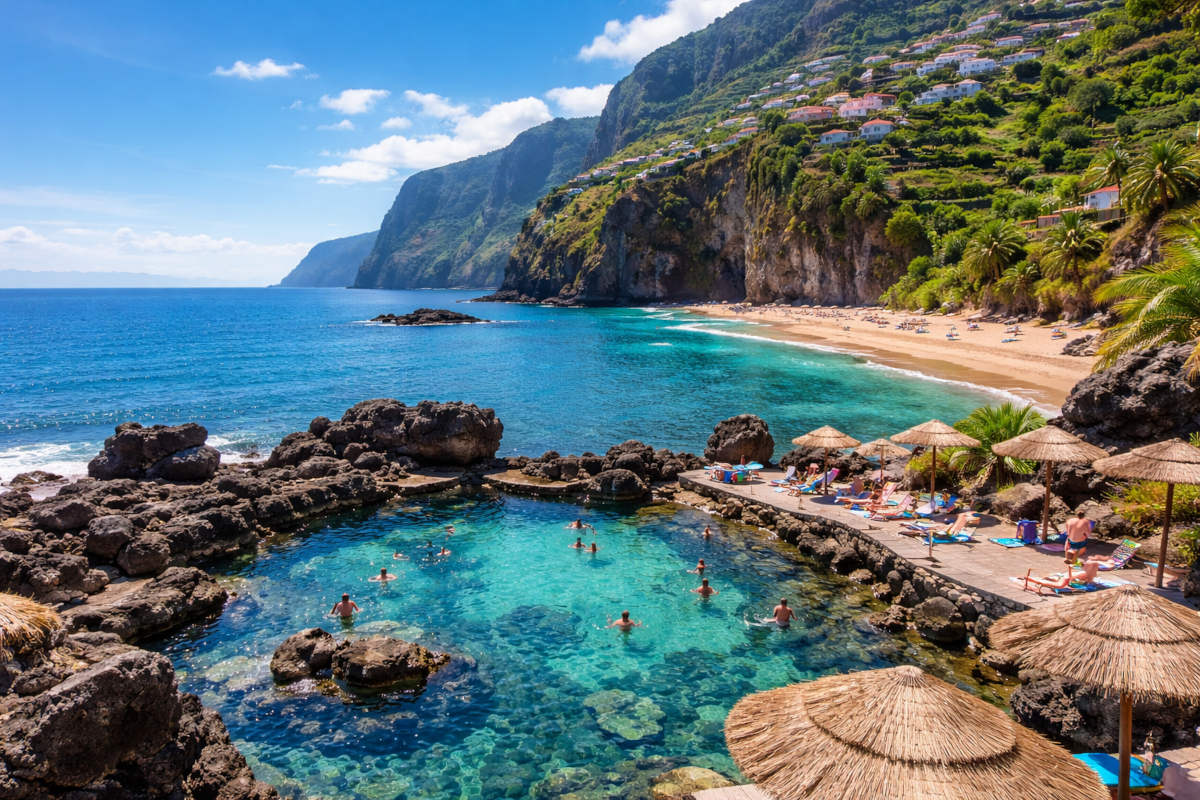
Madeira is a volcanic island, which means you will not find endless stretches of golden sand like in mainland Portugal or the Algarve. Instead, you will discover dramatic black sand beaches, lava rock swimming pools, rugged Atlantic coastlines, and crystal-clear natural pools carved by volcanic activity.
If you are wondering:
-
Can you swim in Madeira?
-
Are there sandy beaches?
-
Where are the best natural pools?
-
Which beach is best for families?
This guide covers everything you need to know.
Can You Swim in Madeira?
Yes, you can swim in Madeira year-round, but conditions vary by season.
Ocean temperatures:
-
Winter: 18–19°C
-
Spring: 19–20°C
-
Summer: 21–24°C
-
Autumn: 22–24°C
The Atlantic is cooler than the Mediterranean, but during summer and early autumn, swimming is very comfortable.
Sea conditions can be rough on exposed coastlines, which is why natural swimming pools are one of Madeira’s biggest advantages.
Types of Beaches in Madeira
Understanding Madeira’s coastline helps set expectations.
1. Black Sand Beaches
Formed by volcanic rock erosion, these beaches are dramatic and photogenic.
2. Pebble Beaches
Common across the island. Water clarity is often excellent.
3. Artificial Sandy Beaches
Some beaches use imported golden sand to create a softer shoreline.
4. Natural Volcanic Pools
Madeira’s most unique feature. Lava formations create protected swimming areas filled naturally by the ocean.
Best Natural Swimming Pools in Madeira
Porto Moniz Natural Swimming Pools
Located in Porto Moniz, these are Madeira’s most famous pools.
Lava rock formations create naturally protected swimming basins filled with clear Atlantic water.
Why visit:
-
Safe swimming conditions
-
Changing facilities
-
Dramatic scenery
Best time: Summer mornings before crowds.
Seixal Natural Pools
Near Seixal, smaller volcanic pools offer a quieter experience.
These pools feel more wild and less structured than Porto Moniz.
Ideal for photographers and those seeking fewer tourists.
Doca do Cavacas (Poças do Gomes)
Located near Funchal, this complex of lava pools provides easy access for travelers staying in the capital.
A good option if you do not want to drive far.
Best Sandy & Black Sand Beaches in Madeira
Seixal Beach
Seixal Beach is the island’s most famous black sand beach.
Framed by green cliffs and waterfalls, it is one of the most photogenic spots in Madeira.
Best for:
-
Photography
-
Scenic relaxation
-
Calm summer swimming
Prainha Beach
Located near Ponta de São Lourenço, Prainha is a small natural sandy beach.
It feels secluded and is ideal for a quieter swim.
Calheta Beach
Calheta features imported golden sand and calmer waters due to its marina protection.
Best for:
-
Families
-
Easy access
-
Warmer microclimate
Machico Beach
Machico offers one of Madeira’s few larger sandy areas.
Good facilities and calmer waters make it popular with locals.
Porto Santo: Madeira’s Golden Sand Escape
If your priority is long sandy beaches, take the ferry to Porto Santo.
Porto Santo features a 9-kilometer stretch of golden sand and warmer waters.
Ideal for:
-
Relaxation
-
Families
-
Beach-focused travelers
Many visitors combine Madeira and Porto Santo in a 7-day itinerary.
Best Beaches for Families
Top choices:
-
Calheta Beach (protected, sandy)
-
Machico Beach (calm waters)
-
Porto Moniz pools (safe structures)
Avoid exposed north coast beaches during rough sea conditions.
Best Beaches for Photography
If you are chasing dramatic landscapes:
-
Seixal Beach at sunrise
-
Porto Moniz during golden hour
-
Prainha for contrast against cliffs
The combination of volcanic rock and Atlantic waves creates striking compositions.
Best Time to Visit Madeira for Swimming
For warmest ocean temperatures:
-
July
-
August
-
September
September often offers the best balance of warm water and fewer crowds.
For detailed seasonal breakdown, refer to your Best Time to Visit Madeira cluster article.
Beach Safety in Madeira
Madeira’s coastline is beautiful but powerful.
Important tips:
-
Check local flag warnings.
-
Avoid swimming during strong swell alerts.
-
Use designated swimming areas.
-
Wear water shoes on rocky beaches.
-
Never dive into unknown waters.
Natural pools are generally the safest swimming option.
Frequently Asked Questions
Does Madeira have sandy beaches?
Yes, but they are limited. Calheta and Machico offer sandy beaches, while Porto Santo has extensive golden sand.
Is the water cold in Madeira?
Water temperatures range from 18°C in winter to 24°C in late summer.
Are Madeira beaches safe?
Yes, when using designated swimming areas and following local safety guidance.
What is the best beach in Madeira?
Seixal Beach is the most scenic. Calheta is best for families. Porto Moniz offers the most unique swimming experience.
Final Thoughts: Madeira’s Coastline Is More Diverse Than You Expect
Madeira may not offer endless golden beaches, but it compensates with dramatic black sand shores, volcanic swimming pools, crystal-clear Atlantic water, and one of Europe’s most unique coastal landscapes.
For travelers who combine hiking, scenic drives, and selective beach time, Madeira offers a balanced and visually unforgettable experience.